


C3 Blog
Electronic Bill of Lading: From Paper to Digital
February 25, 2025

Subscribe to the C3 Blog!
The latest industry news in your inbox.
The Author

 8 min
8 min


Doing business now requires a particular set of documentation standards, which are expected almost globally. The Bill of Lading (or BOL) is one of the most popular documents.
BOLs act as receipts for goods, agreements between people, and title papers, facilitating overseas shipping. Originally, BOLs were paper-based and required manual handling, storage, and verification. However, as supply chains move electronically, paper BOLs are becoming electronic formats. This particular change has simplified logistics for businesses.
In this article, we will explore how the Bill of Lading has evolved from the dated paper era to the electronic age. We will also discuss the insights of the change, its advantages, challenges, and the future trends of the Bill of Lading.
A Brief History of the Bill of Lading
Let’s understand how the Bill of Lading started. Its history goes back centuries. It originated in the medieval maritime trade when merchants required a reliable method to record and guarantee deliveries.
Shipment details and accountability were recorded in handwritten BOLs. These documents ultimately became standardized, specifying the rights and duties of shippers, consignees, and carriers.
By the 20th century, paper BOLs had become standard in global commerce, simplifying logistics. However, as trade volumes grew and supply chains became more complex, paper-based BOL limitations like inefficiency, expenses, and fraud risks became more apparent.
Timeline of the Evolution of the Bill of Lading
So, as the technology became more accessible and the paper-based BOL felt old, most companies have not moved to digital forms of Bill of Ladings. Here is a timeline of the evolution of the Bill of Lading, along with key historical events that led to its transformation:
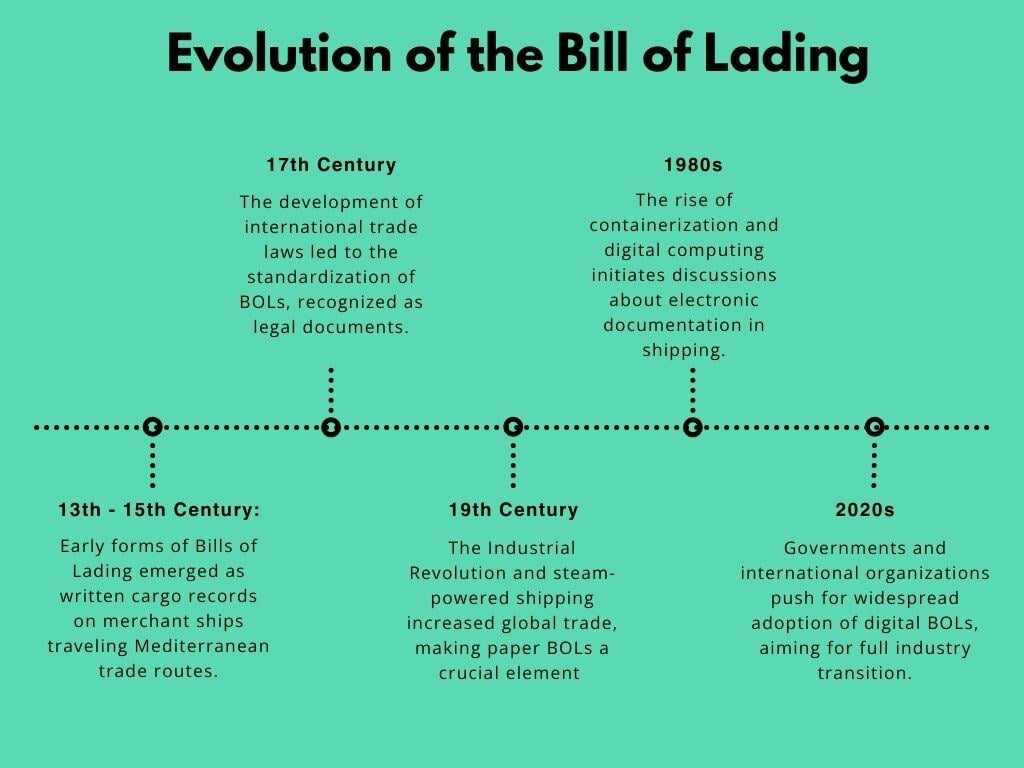
This timeline shows how the BOL gradually shifted from traditional paper-based documentation to the fully digital formats we have today. Technological advancements and regulatory updates drove this change.
5 Benefits of Moving from Paper Bill of Ladings to Digital
Now that we understand the timeline for adopting and digitalizing the Bill of Lading, let us also discuss its advantages. Here are the five benefits of an electronic Bill of Lading over a paper version:
Improves Supply Chain Efficiency — Digital BOLs eliminate the need for physical paperwork, reducing processing times and manual errors and boosting overall supply chain efficiency.
Enables Cost Savings — Printing, shipping, and storing paper bills of lading add to operational costs. Digital solutions significantly reduce these expenses.
Provides Better Security — Paper BOLs can be lost, forged, or damaged. Digital BOLs use encryption and blockchain technology to enhance security and prevent fraud.
Improves Compliance — Many governments now mandate electronic documentation for international trade, and the digital Bill of Lading makes such compliance easier.
Higher Sustainability — Reducing paper usage helps meet global sustainability goals and lower businesses’ carbon footprints.
With all these benefits, it is obvious why the adoption of the digital Bill of Lading has become somewhat of a norm over the last decade. Next, let us understand the technologies that made it a reality.
Key Technologies Driving Digital BOL Adoption
The shift to digital BOLs is made possible by several advanced technologies over the years:
Electronic Data Interchange (EDI)
EDI was the pioneer technology of the 80s, and it is still relevant and widely used. EDI allows businesses to exchange structured electronic documents, reducing the need for manual data entry and increasing accuracy.
Cloud Computing
Cloud-based BOL solutions work like EDI but with the freedom of easy access, real-time updates, and seamless sharing of documents among stakeholders due to the cloud infrastructure.
Artificial Intelligence (AI) & Automation
This is the latest trend in BOL technology. In addition to automating BOLs like EDI or cloud technologies, AI-powered systems can verify information and detect anomalies, reducing human intervention and errors.
A business can choose any of these technologies but should focus on integrating them into its current supply chain ecosystem.
Challenges in Adopting Digital BOLs
Despite its numerous advantages, the adoption of digital BOLs is not without challenges:
- Resistance to Change – Many businesses still rely on traditional methods and hesitate to adopt new digital solutions.
- Legal & Regulatory Barriers – Some countries and organizations require paper BOLs due to outdated regulations.
- Interoperability Issues – Different companies use different systems, which creates integration challenges for digital BOL platforms when sharing data across them.
- Cybersecurity Concerns – Like other digital systems, digital BOL systems are vulnerable to cyber threats and require robust security measures to protect sensitive data.
- Integration Challenges – When the digital Bill of Lading solution is not integrated correctly, information flow from various supply chains to the electronic BOL management solution and vice versa is usually a pain.
The Future of the Bill of Lading
We are in 2025, and the transition to digital BOLs is gaining momentum globally. Here is a quick list of trends that are likely to shape the future of digital bill of lading:
- Global Standardizations
International organizations like the International Chamber of Commerce (ICC) and the Digital Container Shipping Association (DCSA) are working towards universal standards for digital BOLs.
- Integration with IoT and Smart Contracts
The Internet of Things (IoT) can provide real-time tracking data, which can be linked to smart contracts that automate BOL verification and payment processes.
- Wider Regulatory Acceptance
More governments are updating trade policies to accept and promote electronic BOLs.
- AI and Predictive Analytics
AI-driven analytics will enhance digital BOLs by predicting potential shipment delays, optimizing routes, and ensuring compliance.
The future of the bill of lading is super exciting. Many use cases will focus on integrating the digital bill of lading into larger logistics processes to make shipping seamless and faster.
Build Your Digital-Ready Supply Chain With C3 Solutions
Logistics have transformed from paper bills of lading to their digital form. Efficiency, compliance, and protection are among the compelling advantages and cost reductions the move provides. Adoption challenges exist, but that will not stop the worldwide switch toward digital bills of lading.
C3 Solutions recognizes the benefits of smooth supply chain operations and offers innovative technology to support companies’ transition to digital supply chain solutions. These solutions include yard and dock management, which helps companies optimize logistics and remain ahead of the electronic curve.
Are you prepared to modernize your supply chain? Connect with C3 Solutions today and start your journey toward a practical and secure supply chain.

Other articles you might like
-

Why Audit Logs and System Health Checks Matter in Yard Management
By Marc Tomkinson • August 13, 2026The morning team came in and found a trailer at dock 7 that was supposed to be in bay 14…. -
Carrier Management in Transportation: Best Practices and Challenges
By Neil McEvoy • July 30, 2026A scheduler at a busy DC opens her inbox on Monday morning. Forty-three emails from carriers. Three need different appointment… -

Self-Service Dock Scheduling: What It Looks Like for Drivers and Dispatchers
By Greg Braun • July 21, 2026A dispatcher needs to book a dock appointment at a DC in New Jersey. She calls and is put on…
Leave a comment