


C3 Blog
5 Supply Chain Models: Real Examples and What They Actually Teach You
January 25, 2025

Subscribe to the C3 Blog!
The latest industry news in your inbox.
The Author

 14 min


Most supply chain failures don’t start with a disruption. They start with the wrong model, a structure built for a business that no longer exists, or copied from a competitor without understanding why it worked for them.
The five supply chain models covered here are drawn from real companies that made deliberate choices about how to structure their operations. Each one reflects a different set of tradeoffs between cost, speed, flexibility, and risk. None of them is universally right. What they share is that the choice was intentional, and the execution followed through.
The Continuous Flow Model: PepsiCo
The Continuous Flow Model is built for operations where demand is high volume and predictable. For PepsiCo, that means keeping products moving through the chain with minimal stoppages, from raw ingredients through manufacturing, distribution, and retail replenishment. It works because PepsiCo’s core product lines don’t change much week to week. The demand signal is stable enough that the supply chain can be optimized around consistency rather than flexibility.
PepsiCo has also invested heavily in analytics, using demand data to sharpen production planning and reduce waste across a portfolio that spans hundreds of SKUs.
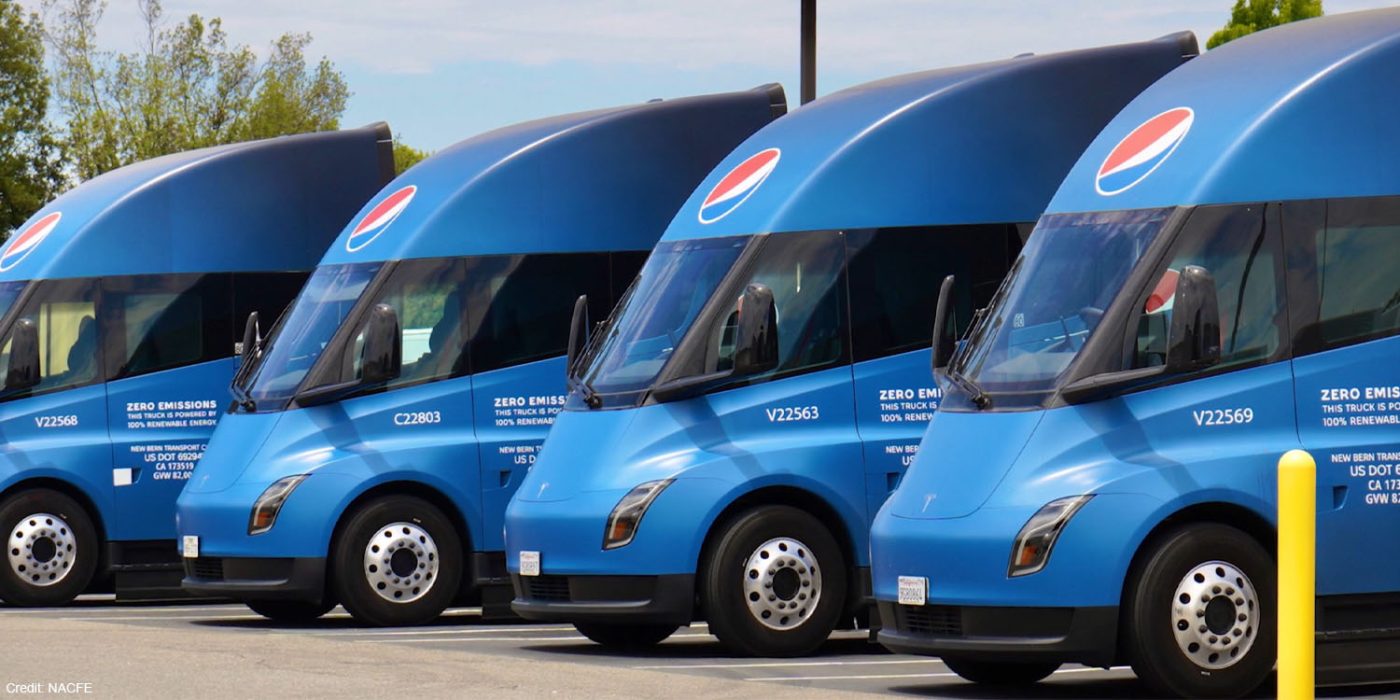
Source: NACFE
Pros of Continuous Flow Model:
- Predictable throughput. Stable production rates let PepsiCo plan labor, materials, and distribution with confidence. At mass-production volumes, that predictability is what keeps shelves stocked.
- Lower operating costs. Eliminating work-in-progress inventory reduces holding costs and warehouse space. For a company running at PepsiCo’s volume, even marginal cost reductions per unit compound significantly.
- Consistent quality control. Standardized processes mean quality checks are built into the line, not bolted on afterward. Fewer process variations mean fewer defects.
Cons of Continuous Flow Model:
- Limited flexibility. A sudden demand shift or supply disruption is difficult to absorb when the whole system is optimized for steady state. PepsiCo’s response to unexpected changes tends to be slower than a more flexible model would allow.
- Capital intensive. Manufacturing lines built for continuous high-volume output require significant upfront investment and are difficult to repurpose if the product mix changes.
- Demand dependency. The model assumes demand stays stable. A sharp category decline, or a new competitor eating into core SKUs, leaves the operation exposed with inventory it cannot quickly redirect.
The Agile: Zara
Zara’s supply chain model is one of the most studied in retail, and for good reason. Where most fashion brands run on six-month design-to-shelf cycles, Zara compresses that to a few weeks. The Agile Model makes that possible by keeping production close to market, running small batches, and treating demand signals from stores as real-time inputs rather than annual forecasts. It’s not just fast, it’s structured to be fast, which is a different thing entirely.
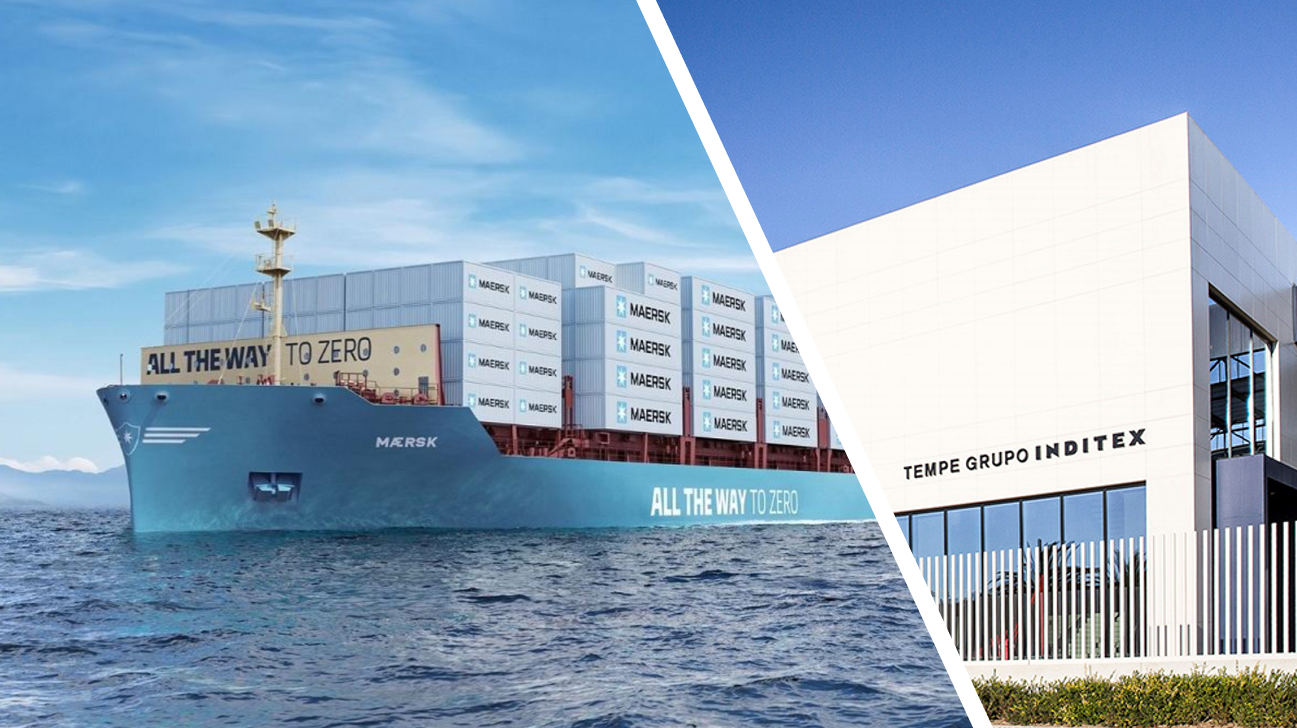
Source: https://container-news.com/
Pros of the Agile Model:
- Speed to market. Weeks, not months, from concept to shelf. In fashion, where a trend’s window can close faster than a traditional supply chain can respond, that speed is a direct revenue advantage.
- Demand-responsive production. Small production runs mean Zara can double down on what’s selling and pull back on what isn’t — without being stuck with a warehouse of unsold inventory.
- Lower inventory exposure. Producing to near-current demand keeps unsold goods and storage costs low, a meaningful margin lever in an industry where markdowns are the norm.
- Sustained customer engagement. Frequent new arrivals give customers a reason to visit regularly. Scarcity of individual styles also creates urgency — if you don’t buy it now, it may be gone next week.
Cons of the Agile Model:
- High infrastructure cost. Maintaining agility at Zara’s scale requires significant investment in near-shore manufacturing, real-time store data systems, and rapid distribution infrastructure. That cost is built into the model.
- Operational complexity. Frequent changeovers and small batch handling are more labor-intensive than long production runs. The model trades per-unit efficiency for responsiveness.
- Supply chain fragility. Speed depends on tight supplier relationships and reliable logistics. A disruption anywhere in the short-cycle chain (a port delay, a key supplier issue) hits faster and harder than it would in a model with more buffer inventory.
The Fast Chain Model: Adidas
The Fast Chain Model looks similar to the Agile Model on the surface, both prioritize speed. The difference is in what drives that speed. Agile is reactive, designed to respond to demand signals. Fast Chain is proactive, engineered to shrink lead times structurally through automation and in-house production. Adidas has pushed this direction explicitly, investing in automated manufacturing to bring a portion of production closer to market and reduce dependency on extended overseas supply chains.
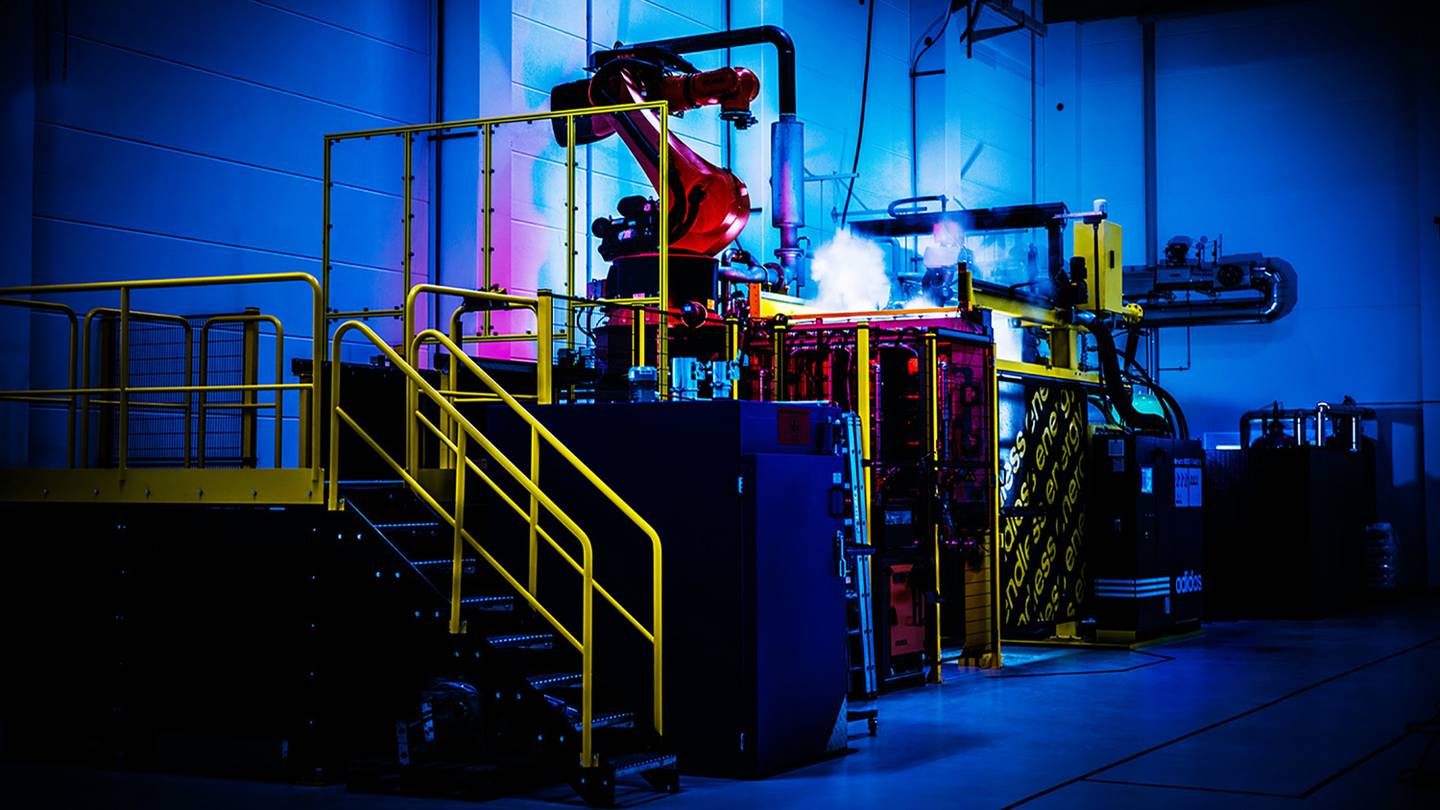
Source: https://www.nbcnews.com/
Pros of the Fast Chain Model:
- Rapid market response. Shorter lead times mean new designs reach retail faster, which matters in sportswear where product drops and limited editions drive consumer behavior.
- Reduced lead times. Compressing the design-to-shelf window gives Adidas more product cycles per year, more opportunities to capture demand before it shifts.
- In-house production control. Owning the production process means fewer handoffs, faster adjustments, and better visibility into quality at each stage.
Cons of the Fast Chain Model:
- Higher operating costs. Automation and in-house production reduce external dependency but replace it with high fixed costs. The efficiency gains take time to materialize at scale.
- Overproduction risk. Speed without accurate demand forecasting produces the wrong inventory fast. When forecasts are off, the model’s velocity becomes a liability rather than an advantage.
- Quality pressure. Compressed timelines reduce the window for quality checks. At speed, defects that a slower process would catch can make it further down the line before they surface.
- Supply chain coordination complexity. Mixing in-house production with external suppliers across multiple regions creates coordination overhead that requires tight systems and clear ownership to manage reliably.
The Efficient Chain Model: General Mills
In consumer packaged goods, margins are thin and volume is high. That combination makes the Efficient Chain Model a natural fit for General Mills. Every stage of the supply chain (raw material procurement, manufacturing, distribution, retail replenishment) is treated as a cost lever. General Mills has built a data and analytics capability specifically to identify inefficiencies across that chain and close them systematically.
This is one of the clearest efficient supply chain examples in the FMCG sector: the model isn’t just about cutting costs, it’s about running a predictable, waste-minimized operation at scale.
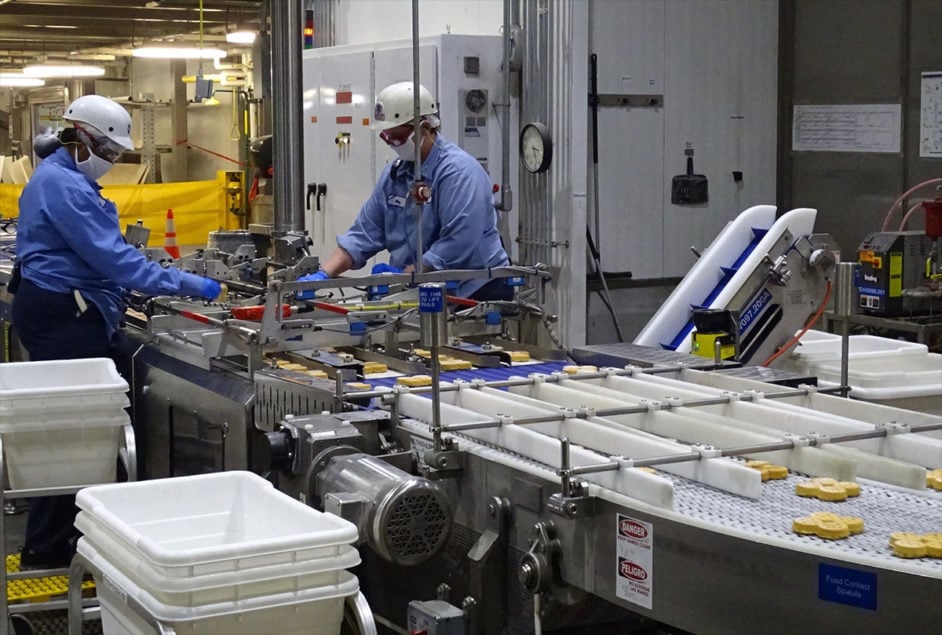
Source: General Mills, inc.
Pros of the Efficient Chain Model:
- Cost efficiency at scale. Standardized processes and bulk operations compress cost per unit. At General Mills’ production volumes, marginal efficiency gains across the chain translate into significant bottom-line impact.
- Economies of scale. Consistent, repeatable processes create the conditions for scale benefits, from supplier negotiations to transportation consolidation.
- Operational predictability. Standardization reduces variability, which makes the supply chain easier to plan, staff, and manage. Fewer surprises means more reliable delivery performance.
- Waste reduction. Lean principles applied across the chain reduce material waste, excess inventory, and unnecessary handling, outcomes that benefit both cost and sustainability targets.
Cons of the Efficient Chain Model:
- Limited Customization Options: The efficiency and standardization focus of the model can restrict the ability to customize processes and products to specific consumer requirements or market segments.
- Slower Response to Market Changes: The cost-effective Efficient Chain Model is organized and standardized, so it is not as responsive to abrupt industry shifts or consumer trends.
- Over-Optimization Risk: There’s a risk that pursuing efficiency will overestimate several aspects, making the supply chain less resilient to disruptions or unexpected demand variations.
- Dependence on Forecast Accuracy: The model is built on accurate demand forecasting, which is crucial because of its success. Any substantial differences between the actual and forecasted demand could cause problems like overstocking or stockouts, affecting efficiency.
The Flexible Model: Office Depot
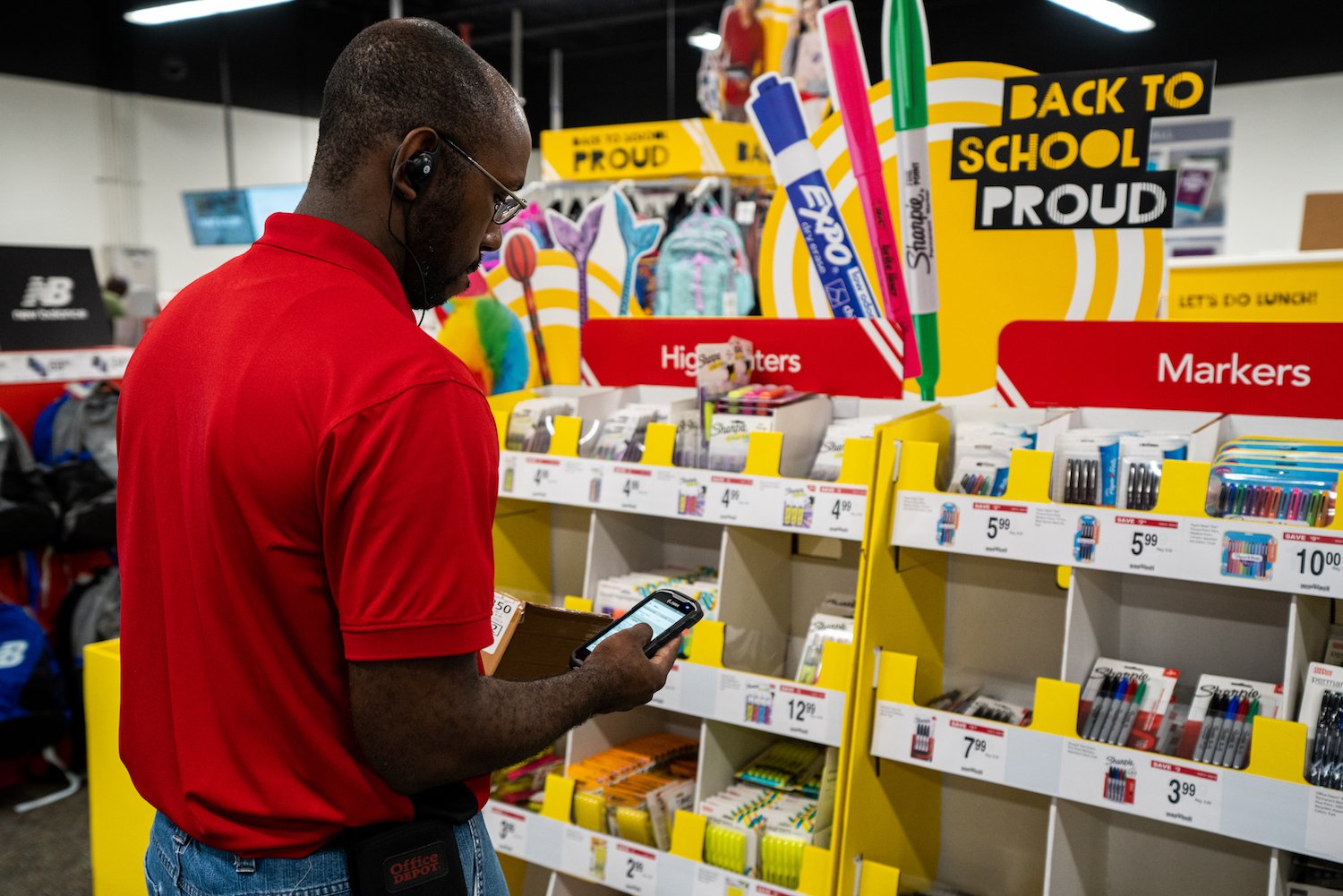
The Flexible Model is designed for operations where demand is volatile and the product range is wide. Office Depot serves both business customers and consumers, across in-store, online, and direct delivery channels, a combination that creates highly variable demand patterns. To manage that variability, Office Depot consolidated its store, supply chain, and delivery operations onto a single integrated platform, reducing the coordination overhead that typically comes with running multiple channels in parallel.
The result is a supply chain model that can adjust to changing conditions without requiring a full operational reset each time.
Source: https://thelabelman.co.uk/
Pros of the Flexible Model:
- High adaptability: The ability to adjust operations without a full redesign is the core advantage. When demand patterns shift (seasonally, by channel, or by customer segment) the model absorbs that change rather than fighting it.
- Broad product and service range. Flexible operations can support a wider SKU range and more service types than a standardized model would allow, which suits Office Depot’s mix of commodity office supplies and higher-touch business services.
- Market responsiveness. New market opportunities, a shift toward hybrid work, a surge in a specific product category, can be acted on without rebuilding the supply chain structure from scratch.
- Customer-centric execution. Meeting varied customer requirements across channels without compromising delivery reliability builds the kind of operational trust that keeps business accounts renewing.
Cons of the Flexible Model:
- Operational complexity. More flexibility means more moving parts to coordinate. Multi-channel operations with frequent adjustments create more handoff points, and more places for things to go wrong.
- Efficiency trade-offs. Flexibility and standardization pull in opposite directions. Frequent process changes disrupt routines and can introduce inefficiencies that a more standardized model wouldn’t have to manage.
- Ongoing technology investment. Sustaining operational flexibility at scale requires continuous investment in systems and staff. That cost doesn’t go away, it’s built into what the model requires to function.
- Consistency risk. Too much flexibility without governance creates inconsistency. The model needs guardrails (clear process standards and decision ownership) or adaptability becomes unpredictability.
Choosing the Right Supply Chain Model for Your Operation
The five supply chain models here don’t exist on a spectrum from worst to best. Each one reflects a deliberate set of tradeoffs suited to a specific business context. PepsiCo’s continuous flow works because demand is predictable and volume is massive. Zara’s agile model works because speed is the competitive variable. General Mills’ efficient chain works because margin pressure demands cost discipline at every stage. The model that fits your operation depends on what you’re actually optimizing for.
In practice, most operations don’t run a single model in its pure form. The more useful framing is to understand which model’s logic dominates your current design — and whether that logic still matches your market. If you’re running a continuous flow structure but your demand has become unpredictable, the mismatch is likely showing up somewhere in your numbers.
Effective supply chain planning and the right execution tools are what translate a well-chosen model into consistent operational results. If you want to understand how yard, dock, and gate coordination fits into that picture, contact C3 Solutions.

FAQ
The five most widely referenced supply chain models are the Continuous Flow, Agile, Fast Chain, Efficient Chain, and Flexible models. Each is suited to a different operating context: continuous flow for stable high-volume demand, agile for fast-changing markets, fast chain for speed-driven industries, efficient chain for cost-sensitive high-volume operations, and flexible for businesses managing variable demand across multiple channels.
Supply chain planning is the process of aligning inventory, production, transportation, and distribution decisions with anticipated demand. The supply chain model a company chooses shapes how that planning is structured, a continuous flow operation plans very differently from an agile one. Getting the model right is a prerequisite for supply chain planning to work as intended.
General Mills is one of the clearest efficient supply chain examples in consumer goods. The company runs a highly standardized operation focused on driving down cost per unit across procurement, manufacturing, and distribution. It uses data and analytics to identify inefficiencies and close them systematically, making the supply chain itself a competitive advantage in a low-margin industry.
Model supply chain management refers to managing a supply chain according to a defined structural framework, choosing a specific operational model (agile, efficient, flexible, etc.) and aligning processes, systems, and performance metrics to that model. The alternative is an ad hoc approach where processes accumulate over time without a coherent design, which typically produces inconsistent results as the business scales.
Other articles you might like
-

3PL Process Flow: A Step-by-Step Overview
By Neil McEvoy • May 5, 2026Third-party logistics providers juggle numerous clients at once, each bringing their own service agreements, inventory structures, and standards. When the… -

Best Practices for Optimizing Delivery Routes Efficiency
By Greg Braun • April 28, 2026Delivery operations are built on plans that rarely survive contact with the day. The gap between the route a dispatcher… -

A Practical Security Checklist for Evaluating Logistics SaaS Integrations
By Marc Tomkinson • April 24, 2026A logistics team decides to connect a new SaaS platform to their existing systems. The goal seems straightforward: automate data…
Leave a comment